

Ever walked into a room and just felt… nothing? Like it’s missing a soul, a story, a pulse? Trust me, I’ve been there. We spend so much time making our homes look ‘modern’ and ‘minimalist’ that sometimes, we strip them of the very thing that makes a space truly alive: character. That’s precisely why I want to talk about Abstract African Art. It’s not just a trend; it’s a powerful, often overlooked, way to inject profound emotion, cultural depth, and undeniable modernity into any contemporary setting. This isn’t about simply filling a space; it’s about enriching it.
Here at Moshaki, we believe in connecting you with pieces that tell a story, pieces handcrafted with purpose. That’s why we curate original art and artefacts that celebrate timeless design and African heritage. When you bring an authentic piece of abstract African art into your home, you’re not just decorating; you’re engaging with a legacy of creativity and spiritual depth that transcends continents and centuries.
Let’s dive in and explore why this art form is exactly what your space might be crying out for.

What Exactly is Abstract African Art, Anyway?
When most people think of ‘African art’, they often picture traditional masks or realistic animal carvings. And whilst those are undeniably beautiful and important, they only scratch the surface. Abstract African Art, in its truest form, is something different entirely. It’s less about literal representation and more about capturing the essence, the spirit, the underlying emotion of a subject. Think bold lines, fluid shapes, exaggerated forms, and often, a powerful use of negative space.
Unlike some Western abstract art that emerged from a desire to break away from tradition, much of African abstraction is deeply rooted in tradition. It’s symbolic, ritualistic, and spiritual. These aren’t random swirls; they’re often codified expressions of proverbs, ancestral spirits, social structures, or natural phenomena. The artists aren’t trying to paint a picture of a tree; they’re trying to convey the tree’s life force, its connection to the earth, or its role in a community’s beliefs.
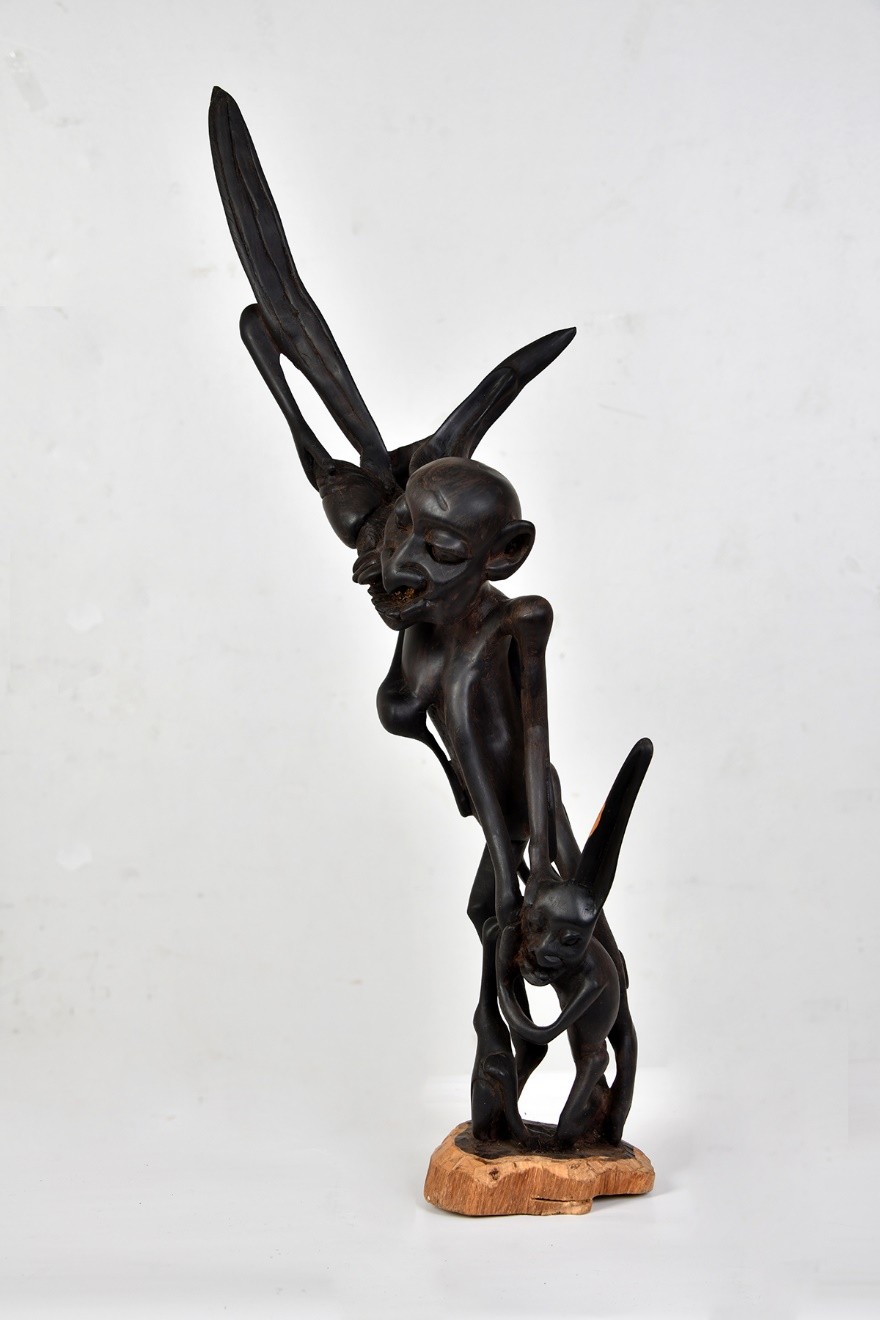
For example, take the Makonde people from Tanzania and Mozambique. They are masters of abstract sculpture, with their renowned Shetani spirit figures. These pieces are wonderfully surreal, with elongated bodies and exaggerated features that represent the spirits moving between the visible and invisible worlds. It’s not about depicting a human accurately; it’s about illustrating an otherworldly presence in a way that’s both evocative and deeply artistic. Another fantastic example is the Makonde Tree of Life sculpture, where interwoven figures represent generations supporting one another – a tangible metaphor for family unity, crafted with powerful abstract forms.
It’s a language of form, texture, and often, deeply resonant colour, speaking to the soul rather than simply illustrating reality. This is why it works so well in modern homes: it doesn’t just sit there; it communicates. It asks you to look deeper, to feel more.
Why Should You Care About Abstract African Art for Your Modern Home?
Alright, let’s get down to brass tacks. You’ve got a sleek, contemporary space. Clean lines, muted tones, maybe some industrial touches. Why on earth would you introduce something that, to the untrained eye, might seem ‘tribal’ or ‘old-fashioned’? Because it’s anything but.
It Infuses Genuine Emotional Depth
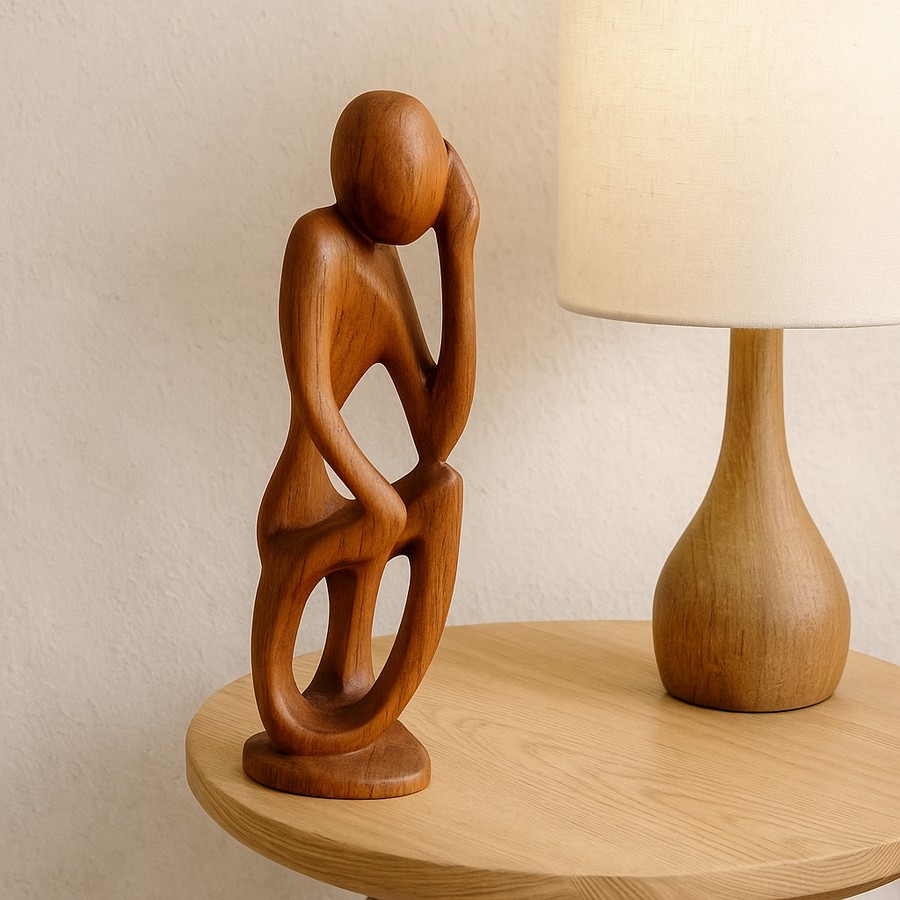
Modern homes, for all their beauty, can sometimes feel a bit sterile. They lack warmth, history, a sense of lived experience. Abstract African art is the antidote. These pieces carry centuries of stories, beliefs, and emotions within their very forms. When you look at a hand-carved piece like our “Man in Thought” sculpture, for example, even though the face is minimalist, the posture and flowing lines convey a profound sense of contemplation and universal humanity. It’s a quiet power that resonates. It’s not just a sculpture; it’s a moment of reflection captured in wood. This isn’t fluff; this is real human emotion, etched into a physical object.
It’s Timeless Modernity (Yes, Really!)
You might think abstract art is a recent Western invention. Wrong. African artists have been creating abstract and stylised forms for millennia. The clean, unadorned lines, the focus on essential shapes, the monochromatic or earthy palettes you often find in these pieces – they actually align perfectly with contemporary minimalist aesthetics. They add an organic texture and a soulful counterpoint to otherwise stark interiors. It’s like putting a vintage leather armchair in a glass-and-steel loft; it just works. It gives your space a sense of history without making it feel dated. It’s not about competing with your modern furniture; it’s about complementing it in a way that elevates the entire room.
It Makes a Powerful Cultural Statement
Let’s be honest, anyone can buy mass-produced art. But how many people have a piece that genuinely tells a story of abstract tribal art from Tanzania? This isn’t just decor; it’s a statement about your appreciation for global heritage, skilled craftsmanship, and ethical sourcing. Each piece from Moshaki promotes local artisans, fair trade practices, and the use of sustainable materials. So, when you choose our art, you’re not just making a design choice; you’re supporting a whole ecosystem of purpose-driven creation. You’re telling visitors, “I value beauty, yes, but I also value stories, people, and the planet.” That’s a powerful message.
How to Choose the Right Abstract African Art Piece for Your Space
So, you’re convinced. You want to bring some of this magic into your home. But where do you start? It can feel overwhelming, especially when you’re looking for something authentic and meaningful. Don’t overthink it; just follow a few simple rules, the same way you’d approach any significant investment.
First, consider the **size and scale** of your space. A large, commanding piece like a geometric tribal shield can become an instant focal point in a spacious living room or hallway. For smaller areas, or to add interest to a bookshelf, smaller sculptures like our abstract seated figure work wonders. Think about where your eyes naturally land when you walk into a room – that’s often the perfect spot for a piece that demands attention.
Next, **authenticity is key**. This isn’t about buying a cheap replica. Look for pieces that are clearly hand-carved, where the natural variations in the wood or the hand-painted pigments tell a story of human touch. At Moshaki, we partner directly with artisans, ensuring every piece reflects genuine craftsmanship and cultural integrity. You’re investing in art, not just decoration. The imperfections are often where the beauty and the story reside.
Finally, and perhaps most importantly, **choose something that resonates with you personally**. Does the idea of unity and connection speak to you? Perhaps a hand-carved African couple sculpture is a perfect fit. Do you find peace in contemplation? Our “Man in Thought” sculpture might be your calling. Abstract art is subjective, and its power lies in its ability to evoke a personal response. Don’t pick something just because it ‘matches’ your sofa; pick it because it speaks to your soul, because it sparks joy or curiosity, because it feels right. That’s the real secret to good art acquisition.
Styling Your Space with Abstract African Art: Practical Tips
So, you’ve found a few pieces that you love. Now, how do you integrate them into your home without making it look like a museum or a cluttered souvenir shop? It’s simpler than you think. The key is strategic placement and mindful curation.
Create a Powerful Focal Point
A single, commanding piece of abstract African art can anchor an entire room. Imagine a large, 1-metre tall Makonde Tree of Life sculpture against a plain wall. It instantly draws the eye, provides vertical interest, and gives the room a sense of groundedness and cultural weight. This works especially well in open-plan living areas or minimalist spaces where every object counts. Don’t be afraid to let it stand alone; its presence is enough.
Group Smaller Sculptures to Tell a Story
If you have several smaller pieces, don’t scatter them aimlessly. Group them together on a console table, a mantelpiece, or within a display cabinet. This creates a mini-collection, allowing the pieces to interact and tell a more complex story. For instance, a trio of hand-carved baboon figurines can evoke a sense of playfulness and community, far more than if they were placed in separate corners of the room. It’s about creating vignettes, not just placing objects.
Blend with Contemporary Furniture
The beauty of **Abstract African Art** is its versatility. It doesn’t demand a purely ‘ethnic’ interior. In fact, it shines when juxtaposed with modern, minimalist, or industrial furniture. The rich textures of hand-carved wood provide a warm contrast to sleek metal or glass, and the organic shapes soften the sharp lines of contemporary design. This creates a dynamic tension that makes both the art and your furniture look better. Think of it as an unexpected element that adds depth and personality.
Leverage Lighting to Highlight Details
Good lighting can transform how art is perceived. Use spotlights or accent lighting to highlight the textures and contours of your sculptures. The play of light and shadow on a hand-carved surface can reveal new depths and nuances, bringing the piece to life. This is particularly effective with dark, ebonised wood carvings where subtle shifts in light can create dramatic effects.
Here’s a real-life example: I once worked with a client who had a stunning, stark white, minimalist living room. We placed a single, tall abstract ebony wood sculpture on a low, concrete plinth. The contrast was incredible. The sculpture’s deep, rich texture and flowing lines added warmth and a narrative that the room desperately needed, turning it from merely stylish to truly captivating. It wasn’t about adding ‘more’; it was about adding the *right* thing.

The Moshaki Difference: Our Commitment to Heritage and Quality
At Moshaki, we’re not just selling art; we’re sharing a piece of history, a cultural narrative, and the incredible skill of African artisans. Our journey began with a deep appreciation for timeless design and the rich tapestry of African heritage. Every single piece you find here – whether it’s a piece of clothing, a handcrafted artefact, or a work of art – is carefully curated to enrich contemporary living while honouring its origins.
We’re fiercely committed to supporting local craftsmanship. This means ensuring fair trade practices, fair wages, safe working conditions, and investing in the communities where these incredible pieces are made. We believe that true luxury isn’t just about the product itself, but about the story behind it, the hands that made it, and the values it represents.
When you choose Moshaki, you’re choosing design with purpose. You’re choosing quality materials – often low-impact and sustainably sourced – and eco-conscious production methods. This isn’t just about buying a beautiful object; it’s about being part of a larger movement that values quality, heritage, and style, all while being socially and environmentally responsible. It’s about knowing that every stitch, every carving, every brushstroke reflects a rich heritage, genuine artistry, and a level of care that goes far beyond fleeting trends.
If you’re curious to explore more, feel free to browse our full collection of Arts & Artifacts. You’ll find a treasure trove of pieces, each waiting to tell its unique story in your home.
Frequently Asked Questions About Abstract African Art
What are common motifs and symbols in Abstract African Art?
Common motifs often include exaggerated human forms, geometric patterns (triangles, zigzags, circles), animal symbolism (like the strength of a lion or the wisdom of an elephant), and representations of spiritual beings or ancestral figures. These motifs are rarely purely decorative; they almost always carry deep cultural, social, or spiritual meaning related to fertility, protection, community, or rites of passage.
How do I care for my African wood sculpture or mask?
Generally, African wood sculptures and masks require minimal care. Keep them out of direct sunlight to prevent fading or cracking, and away from sources of excessive moisture or extreme temperature changes. Dust regularly with a soft, dry cloth. For ebonised or polished pieces, a small amount of natural beeswax or wood oil can be applied occasionally to maintain their sheen and protect the wood. Avoid harsh chemical cleaners, as these can damage pigments and finishes.
Is it ethical to buy Abstract African Art?
Absolutely, when done through reputable channels. At Moshaki, we prioritise ethical sourcing, fair trade practices, and direct partnerships with artisans. This ensures that the artists receive fair compensation for their work, and that traditional craftsmanship is supported and sustained. It’s crucial to buy from businesses that are transparent about their sourcing and commitment to social responsibility to ensure you’re contributing positively to the communities and cultural heritage.
What’s the difference between traditional and modern African abstract art?
Traditional African abstract art often served a specific ritualistic, spiritual, or social function within its community. Its abstraction was a means to represent concepts, spirits, or social hierarchies rather than simply an aesthetic choice. Modern African abstract art, while often drawing from these traditional roots and forms, may also incorporate contemporary influences and be created primarily for aesthetic appreciation, exhibition, or commercial sale, much like global contemporary art. Both forms are rich in meaning and artistic value.
Can Abstract African Art be displayed outdoors?
Generally, hand-carved wooden African art is best displayed indoors. Exposure to outdoor elements like direct sun, rain, and humidity can cause wood to crack, warp, fade, or suffer from insect damage. If you wish to display an artwork outdoors, ensure it is specifically designed and treated for outdoor use, or place it in a sheltered area with stable environmental conditions, and be prepared for increased maintenance.
Ready to Transform Your Space?
Look, I get it. Investing in art, especially something as culturally rich and distinct as Abstract African Art, can feel like a big decision. But what’s bigger? Filling your home with soulless mass-produced items, or choosing pieces that genuinely resonate, tell a story, and give your space a heartbeat?
Your home should be a reflection of who you are, what you value, and the stories you want to tell. Abstract African art offers a unique opportunity to do just that – to infuse your space with emotion, modernity, and a tangible connection to a vibrant cultural heritage. It’s not just about what you see; it’s about what you feel, what you learn, and the conversations it sparks.
So go on, take a look around. Imagine one of these incredible pieces in your home. Feel that connection? That’s the power of purpose-driven design. That’s the Moshaki difference.
Got questions or need a hand finding the perfect piece? Don’t hesitate to reach out. We’re here to help you make your space truly yours.
Contact Details:
The Office
Mikocheni Rose Garden Road – Vunjabei, Kinondoni, Dar es Salam
Phone Number
+255 655 220 387
Contact Information
info@moshaki.com
Our Business Hours
Monday – Friday: 8am – 4pm
Saturday – Sunday: 9am – 5pm
Useful links: https://moshaki.com/arts-artifacts/